Getting rid of old IT equipment should not mean renting a van, loading pallets yourself or leaving servers in a corridor for months. WMG Waste eRecycling collects e-waste from businesses across the Netherlands, and for most standard corporate collections the pickup is free.
This guide explains who qualifies for free pickup, what we collect, how to book, how to prepare for collection day, and what happens to your equipment after it leaves your building. If you are new to the topic, our step-by-step guide on how to recycle e-waste gives the wider picture.
Who Qualifies for Free Pickup
Free pickup is available for most standard corporate collections anywhere in the Netherlands, from major cities such as Amsterdam, Rotterdam and Eindhoven to rural areas. That covers the typical situations businesses deal with: an office replacing its laptops, a company moving premises, an IT department clearing a storeroom, or a data center decommissioning hardware.
For residential collections or very small quantities, a modest collection fee may apply. There is no minimum quantity for pickup, so we will still collect a small load, and smaller quantities can also be dropped off at our facility instead.
Organizations with several offices or sites can have collections coordinated across multiple locations in the Netherlands, with reporting consolidated for all of them. That is useful for retail chains, schools, healthcare groups and companies with regional branches, where e-waste builds up in many places at once.
The easiest way to find out whether your collection is free is to tell us what you have. We confirm this in your quote, so there are no surprises on collection day and no hidden fees afterwards.
What We Collect
We collect all common types of business e-waste, including:

- Desktop computers, laptops and workstations
- Servers, storage systems and server racks
- Monitors and screens
- Printers and other office equipment
- Networking equipment such as switches, routers and firewalls
- Mobile phones and tablets
- Cables, chargers and peripherals such as keyboards and mice
- Loose storage media, including hard drives, SSDs, USB sticks and backup tapes
Multifunction printers and copiers deserve a special mention. Many contain an internal hard drive that keeps copies of scanned, faxed and printed documents, so we treat them as data-bearing devices, just like laptops and servers.
We also handle industrial electronics, medical devices and telecommunications equipment. If you have specialized equipment that is not on this list, contact us and we will advise on the right route. You can find a full overview on our e-waste recycling page.
How to Book a Pickup
Booking takes a few minutes. Fill in our quote request form or contact our team directly, and include:
- The pickup address, plus any access details such as loading docks, lifts or parking restrictions.
- The types of equipment and approximate quantities.
- Whether any devices contain data and what level of data destruction you need.
- Your preferred dates and any time windows that work best.
We respond within 24 hours. Standard pickups are usually scheduled within 3 to 5 business days, and urgent collections can often be arranged within 24 to 48 hours, depending on your location. Before the pickup, you receive a confirmation email with the scheduled date and time.
If the collection is tied to a fixed date, such as an office move, the end of a lease or the go-live of new hardware, book as early as you can. It gives us time to plan the right vehicle and crew, and it avoids old equipment ending up in a corridor while the new equipment is being installed.
You can choose a one-time collection for a clear-out or a decommission project, or set up recurring pickups aligned with your IT refresh cycle. We coordinate directly with your facilities or IT department to keep disruption to a minimum.
Preparing for Collection Day
A little preparation keeps the pickup quick and the paperwork accurate:
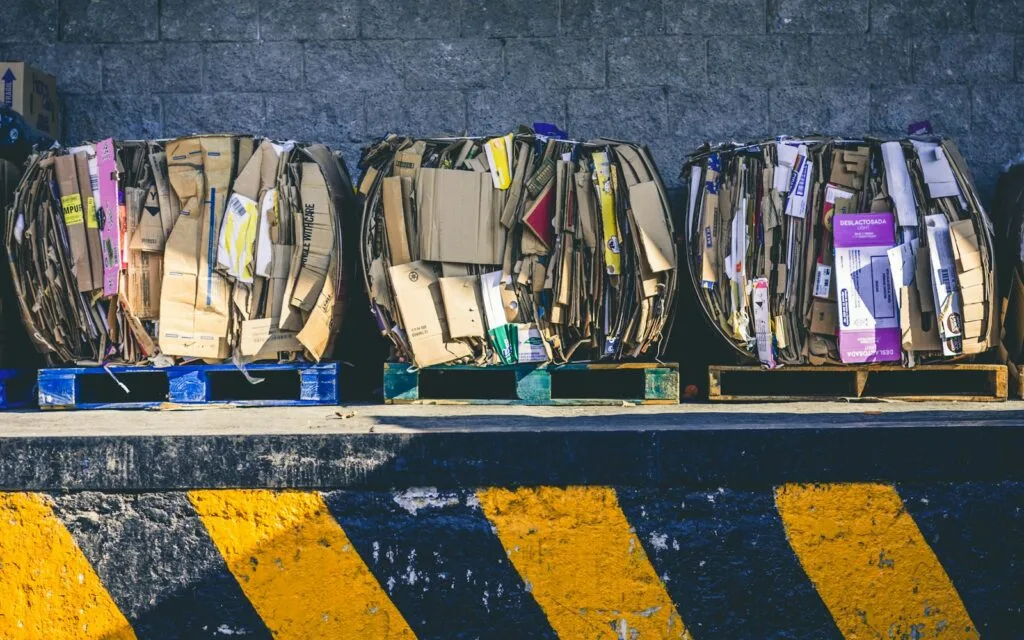
- Gather everything in one place. Ideally somewhere close to an exit or loading area, so our team does not need to collect items from every floor.
- Separate data-bearing devices. Keep laptops, phones, drives and servers apart from non-data items, or label them clearly. This makes the chain of custody easier to document.
- Keep a simple list. Even a rough inventory helps you check the itemized record you receive after collection.
- Handle batteries with care. Leave batteries in devices where possible. Tape the terminals of loose lithium batteries, and keep any swollen or damaged batteries separate.
- Keep screens upright. Monitors are fragile, and broken screen glass is harder to handle safely.
- Arrange a contact person. Someone needs to be available to show the team where to go and sign off the pickup.
There is no need to remove hard drives yourself unless your internal policy requires it. Drives can stay in the devices, and our team logs them as part of the collection.
What Happens After Collection
Your equipment travels in secure containers in GPS-tracked vehicles, and every pickup is documented with timestamps, item counts and digital signatures. Our drivers are trained in handling sensitive equipment and data-bearing devices. Straight after collection, you receive a pickup confirmation with an itemized inventory.
At our facility, each item enters our tracking system. Data-bearing devices go through certified data destruction using NIST 800-88 compliant wiping, degaussing or physical shredding. Equipment with resale value can be refurbished and remarketed, and everything else is dismantled and processed through our WEEELABEX-certified recycling streams. We recover up to 95% of valuable materials, with zero landfill disposal.
Once processing is complete, you receive a full report: recycling certificates for your records and certificates of data destruction listing serial numbers, method and date for each data-bearing device. Together they document the full path of your equipment from your premises to final processing. Because the certificates list serial numbers, you can trace an individual device later if an auditor, client or data protection officer asks what happened to it.
Pickup for Larger Projects
Large decommissions need more planning than a standard collection. For data center clear-outs, office relocations and company-wide technology refreshes, we provide a dedicated project manager to coordinate multi-day pickups and keep everything on schedule. For large volumes, we can also carry out an on-site assessment at no additional cost before the project starts.
Organizations that generate e-waste regularly, or that operate from several locations, can set up a corporate recycling program. It combines scheduled collections, from on-site collection bins to full truckload pickups, with automated notifications before each pickup, consolidated reporting across sites, and quarterly sustainability impact reports. More detail on how we run collections is on our pickup and logistics page.
Ready to schedule a collection? Request a free quote and we will get back to you within 24 hours.